Gas Line Repair & Inspection in Laurelton, Queens
Natural gas systems demand uncompromising technical precision and rigorous adherence to New York City Department of Buildings safety codes. NY Plumbing provides electronic gas leak detection, black iron pipe reconstruction, appliance gas hookups, and pressure integrity certification across Laurelton and Southeast Queens.
Urgent Gas Safety Protocol
If you smell gas or suspect a gas leak: Leave the building immediately and call the gas utility (National Grid at 1-718-643-4050) or 911 from a safe location outdoors. Do not operate electrical light switches, do not use phones inside the building, do not light matches or open flames, and never attempt to locate or repair the gas leak yourself.
Gas Piping Diagnostics, Pressure Testing & Repair
Natural gas infrastructure in Laurelton single-family and multi-family residences relies predominantly on threaded Schedule 40 black steel piping. Over decades, vibrations, foundation settling, mechanical contact, and corrosion in damp basements can loosen threaded joints or pit pipe surfaces.
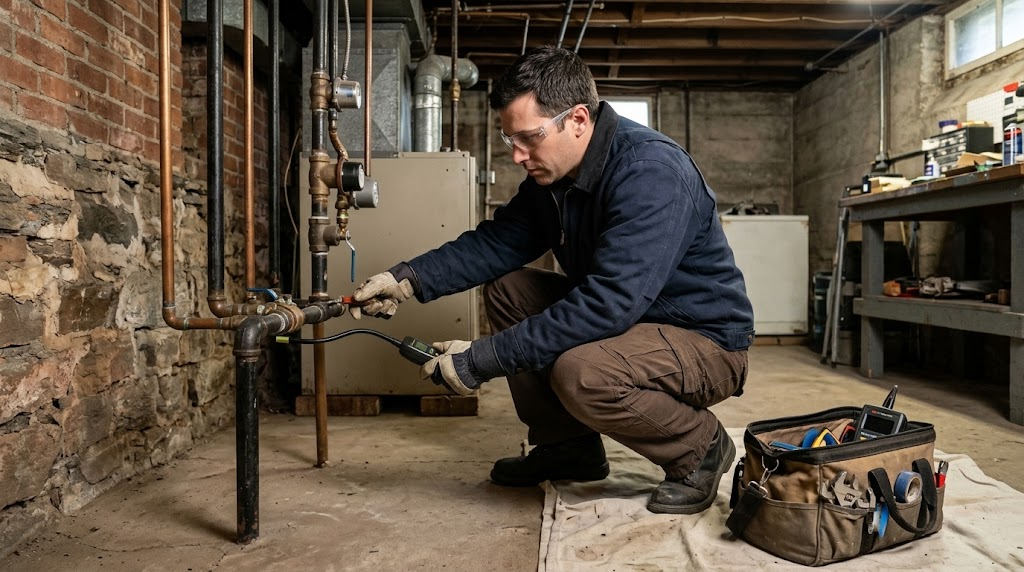
Our diagnostic process utilizes intrinsically safe electronic gas detectors to pinpoint trace volatile gas concentrations. To verify total system integrity, our licensed technicians perform static pressure drop testing using high-resolution digital manometers.
By isolating appliances such as your heating boiler, water heater, and cooking range, we apply regulated test pressures to confirm zero leakage across all hidden branch lines. Compromised pipe sections, worn brass shutoff cocks, and deteriorated unions are replaced with heavy-duty forged steel fittings and certified gas sealant.
NYC Local Law 152 & Code Compliance
New York City enforces strict safety regulations governing interior gas distribution systems:
- Local Law 152 Mandate: Requires periodic gas piping inspections at least once every four years for covered buildings. The law applies to multi-family residential buildings and commercial properties, while one- and two-family residential dwellings are generally exempt unless classified under specific occupancy rules.
- Licensed Master Plumber Requirement: Under NYC Administrative Code, only a Licensed Master Plumber (LMP) or a qualified individual working under their direct supervision may conduct LL152 inspections or execute gas piping modifications.
- DOB Inspection Sign-Off: All major piping restorations, boiler conversions, and line extensions require official DOB permits and utility pressure witness tests prior to gas turn-on.
Safe Gas Line Installation for Stoves, Dryers & Boilers
Proper pipe sizing, manual isolation valves, and approved flexible connectors prevent dangerous leaks and ensure appliances receive adequate fuel pressure.
Kitchen Range & Stove Connections
New cooking stoves require rigid black steel pipe runs terminated with an accessible ball valve within six feet, connected via an AGA-certified stainless steel flexible gas connector.
Boiler & Furnace Manifold Sizing
High-BTU steam and hydronic boilers demand precise pipe sizing calculations. Undersized gas supply feeds cause burner starvation, delayed ignition, soot buildup, and premature component wear.
Sediment Traps & Safety Drips
Every automated gas heating appliance must have a vertical sediment trap (dirt leg) installed ahead of the gas combination control valve to trap rust scale, debris, and moisture before reaching burner orifices.
Gas Piping & Inspection FAQs
Clear, practical guidance on gas line maintenance, safety, and NYC regulatory requirements.
Evacuate everyone immediately into fresh air outdoors. Do not operate light switches, do not use landline or mobile phones inside, do not pull electrical plugs, and never light matches. Once safely outside, call the local utility company (National Grid at 1-718-643-4050) or 911.
NYC Local Law 152 mandates periodic gas piping system inspections by a Licensed Master Plumber at least once every four years for covered buildings. While it primarily applies to multi-family residential buildings and commercial properties, one- and two-family homes are generally exempt unless classified under specific occupancy exceptions.
No. In New York City, all gas piping alterations, extensions, appliance connections, and repairs must legally be performed by a Licensed Master Plumber with DOB permits and official utility authorization to ensure code compliance and fire safety.
Technicians use calibrated combustible gas sniffers to detect trace parts per million of mercaptan odorant, followed by bubbling soapy leak detection solution on pipe joints and high-precision digital manometer pressure testing across isolated pipe segments.
Need Gas Line Diagnostics or Appliance Hookups in Laurelton?
Speak directly with our licensed plumbing specialists to schedule code-compliant gas piping service.